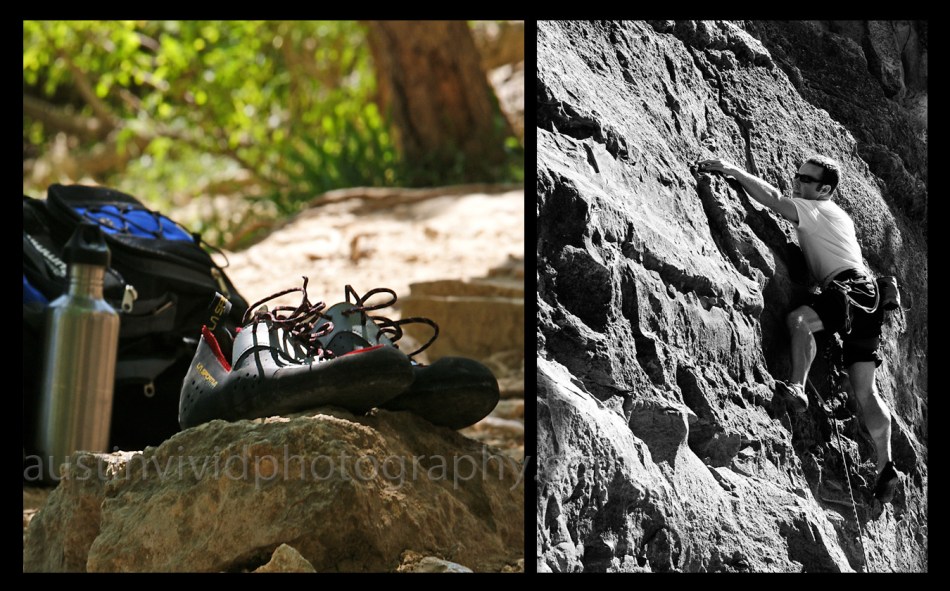
An evening on the rock.
An evening on the rock.

“Rejoice with your family in the beautiful land of life!” -Albert Einstein
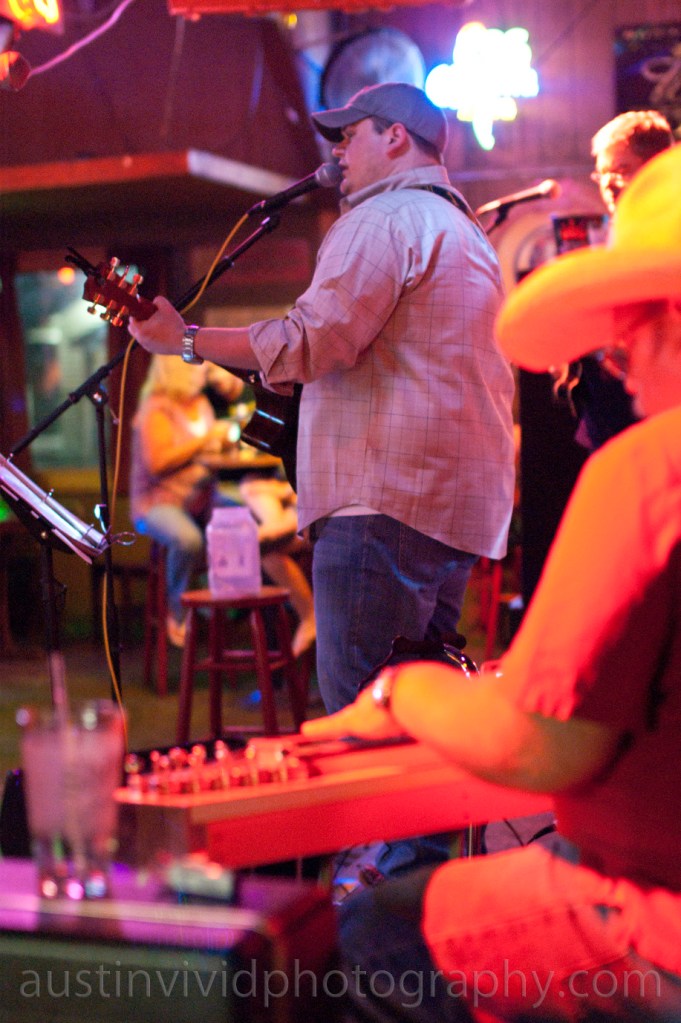 Here in Austin you have to appreciate live music. This is one of Austin’s good ol’ Texas country musicians, The Josh Rekieta Band.
 This is Wally nailing the cute puppy dog face!
Photography Vocabulary
Starting out in photography can be challenging enough. There are times when it seems as though we’re speaking our own language. It’s what makes us feel special. Below is a list of some of our verbage decoded. Use it as often as possible to feel like one of the cool kids.
This list should be a pretty good starting point to hopefully move you along to getting out there and getting some photographs instead of scratching your head wondering if you should have shot racked out with the aperture wide open.
This is a short list that will hopefully get you in the know. By the way, “shooting racked” out simply refers to shooting zoomed all the way on whatever lens you’re using like 200mm on a 70-200mm lens. “Wide open” refers to a large aperture number like a 2.8 where the opening of the lens is wider. Now that you know shooting racked out and wide open can simply mean shooting at 2.8 and 200mm you are one of the cool kids.

 Having your portrait taken isn’t always about headshots and business portfolios. Sometimes they are simply a great way to capture you, today.

“This city is what it is because our citizens are what they are.” -Plato
Austin is a wonderful city because of its wonderful people. This is one of the few places where you will be greeted with an enthusiastic hello and a warm smile. With our serene lakes, live music scene, flavorful restaurants, a multitude of farmers markets and initiative to buy local; it’s no wonder this city is what it is. These are just a few reasons why I am proud to call Austin home.
 Austin is home to many incredible limestone cliffs and canyons along its Greenbelts. The only thing more captivating than the beauty of it all, is the people who climb there. In Austin the climbing community is strong. Never climbed before? No problem. There always seems to be an advanced climber willing to walk you through your first climb. At the same time, the more advanced help each other figure out routes they might be having a difficult time with. Out on the Greenbelt no one is a stranger, instead you are part of the climbing community here in Austin. They are a group of compassionate and considerate people who are always willing to help one another out.
Above is climber and EMT cadet, Ty. When a young climber nearby took a bad fall, he and a couple of his colleagues kicked into high gear and used the useful skills they picked up through the academy. Ty was able to keep the fallen climber calm while stopping the bleeding from the head injury and stabilizing her until the ambulance arrived for transport. Ty is one of the many compassionate climbers of this incredible community here in Austin.
 Good luck tiring this guy out. Einstein hails from San Antonio but whenever he visits Austin he can’t resist Town Lake. Fresh air, miles of trail, and belly flops into the water, it’s no wonder he can’t get enough!
This portion of our website is dedicated to highlighting fun photography tips, tricks, and sometimes a useful gadget or two. The info here is geared more for the novice photographer. If you have anything interesting to add that may be helpful to others please shoot us an email and we will be happy to post it while giving you props. After all, by working together we all improve at a faster pace, and it sure is a lot more fun.
That being said, I think it is important to note that though photography does have its own set of rules such as, “the rule of thirds”, “the golden rule”, “the rule of using AVP as your photographer” (okay, I made the last one up) etc., there are always very good reasons to break rules. Just because they work most of the time does not mean they work all of the time. Think of these tips as more of guidelines. Once you learn them, think outside the box. Some of the most outstanding photographs don’t always follow the rules.
There is however one rule you never want to break. This rule I hold very close, and I urge you to do the same. Are you ready for it? Okay, here it is…Have Fun. I know this may sound lame, but I truly believe if you’re not having fun you’re not doing it right. It seems the camera knows when you’re not into it, because you end up with flat, lifeless photographs. So consider this your first tip: Always let your emotions drive your photographs.
Please feel free to give us feedback for things you may like to see in upcoming Tips and Insights as it is always welcome. Until next time, Have Fun!
–Austin Vivid Photography

 austin vivid photography